
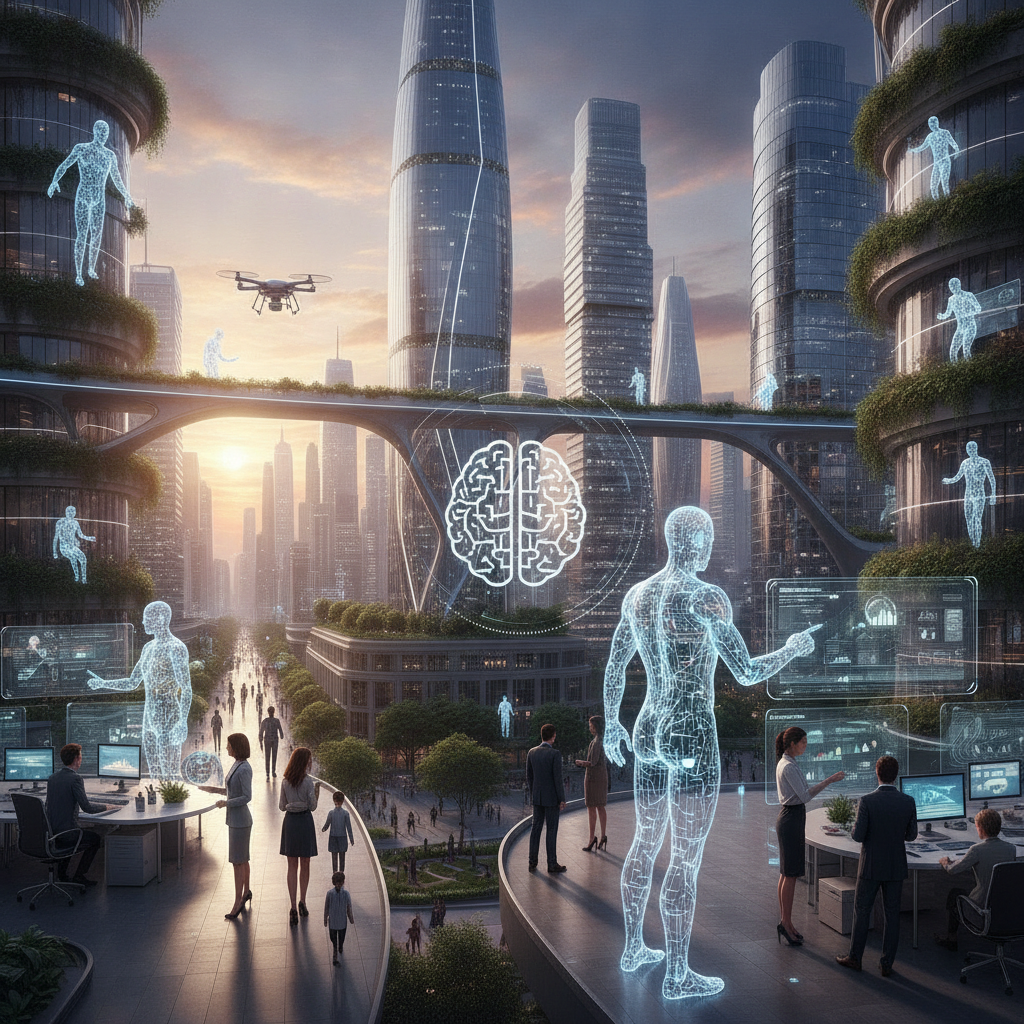
The conversation around artificial intelligence has rapidly evolved. For a long time, AI was primarily seen as a set of tools—algorithms, models, and systems designed to assist human workers, automate repetitive tasks, or analyze vast datasets. Think of predictive text, spam filters, or even sophisticated analytics dashboards. Useful, certainly, but largely reactive and requiring human initiation or oversight. Now, we're on the cusp of a much more profound transformation: the rise of AI employees.
What exactly is an 'AI employee'? It's more than just an advanced automation script. An AI employee is an autonomous AI agent or system designed to take on a specific role within an organization, capable of understanding complex goals, breaking them down into actionable steps, executing those steps, making decisions, learning from outcomes, and even collaborating with other AI or human team members. These aren't just intelligent tools; they are intelligent *agents* with agency, purpose, and the capacity to operate with a degree of independence that was previously unthinkable.
Consider the difference: a traditional AI tool might help a marketing team analyze customer sentiment. An AI *employee* acting as a 'Junior Marketing Strategist,' however, might autonomously monitor social media trends, identify new campaign opportunities based on sentiment analysis, draft initial campaign copy, A/B test different headlines, schedule posts across various platforms, and then report on engagement metrics—all with minimal human intervention after the initial goal is set. This level of comprehensive, goal-oriented execution is the hallmark of an AI employee.
The capabilities driving this new era are significant. Firstly, autonomy allows AI employees to execute tasks without constant human babysitting. They can navigate uncertainties, recover from minor errors, and persist towards a goal. Secondly, their capacity for learning and adaptation means they improve over time, refining their strategies and adjusting to new information, much like a human employee gains experience. Thirdly, effective collaboration, both with other AI agents and human colleagues, is becoming a core feature, enabling complex projects to be tackled by diverse teams. Finally, their ability to tackle complex problem-solving—deconstructing large, ambiguous objectives into manageable sub-tasks—empowers them to handle challenges that go far beyond simple rule-based automation.
We're already seeing nascent forms of these AI employees in various sectors. In customer service, an AI 'Customer Success Lead' might proactively monitor user accounts for potential issues, initiate personalized outreach to at-risk customers, resolve common queries, and escalate truly complex problems to human agents, while also identifying trends in customer complaints to suggest product improvements. In software development, an AI 'Code Assistant' could not only generate boilerplate code but also write unit tests, identify performance bottlenecks, suggest refactors, and even submit pull requests for review, learning from human feedback on its code quality. For data analysis, an AI 'Insight Analyst' could continuously monitor vast streams of business data, flag anomalies, generate real-time performance reports, and even perform predictive modeling to forecast future trends, providing human-readable explanations for its findings.
The benefits for businesses adopting this agentic workforce are compelling. Imagine significantly increased efficiency and productivity as AI employees handle routine, data-intensive, or high-volume tasks with unwavering consistency. This often leads to substantial cost reduction, not necessarily through job elimination, but by reallocating human talent to higher-value, more creative, and interpersonally focused roles. Scalability becomes a competitive advantage; businesses can expand operations rapidly without the traditional recruitment overhead. Furthermore, AI employees can drive innovation by processing information and identifying patterns at speeds impossible for humans, leading to novel insights and faster iteration cycles.
However, the rise of AI employees isn't without its challenges and crucial considerations. Ethical implications, particularly around job displacement and algorithmic bias, demand careful attention and proactive strategies for workforce retraining and augmentation. The complexity of integrating these advanced AI systems with existing legacy infrastructure requires significant technical expertise. Ensuring adequate oversight and control is paramount to guarantee that AI employees consistently align with business goals and ethical standards. Data privacy and security become even more critical when autonomous agents are handling sensitive information. Perhaps most importantly, developing effective human-AI collaboration models and building trust between human and AI team members will be key to unlocking their full potential.
The future of work is not about humans versus AI, but rather humans *with* AI. The advent of AI employees signals a profound shift from merely augmenting human tasks to creating truly collaborative, agentic work environments. Businesses that learn to effectively define roles, integrate, and manage these new digital colleagues will be the ones that thrive in the coming decades. It's an exciting, complex, and rapidly evolving landscape, and understanding how to harness the power of AI employees will be central to future success.