
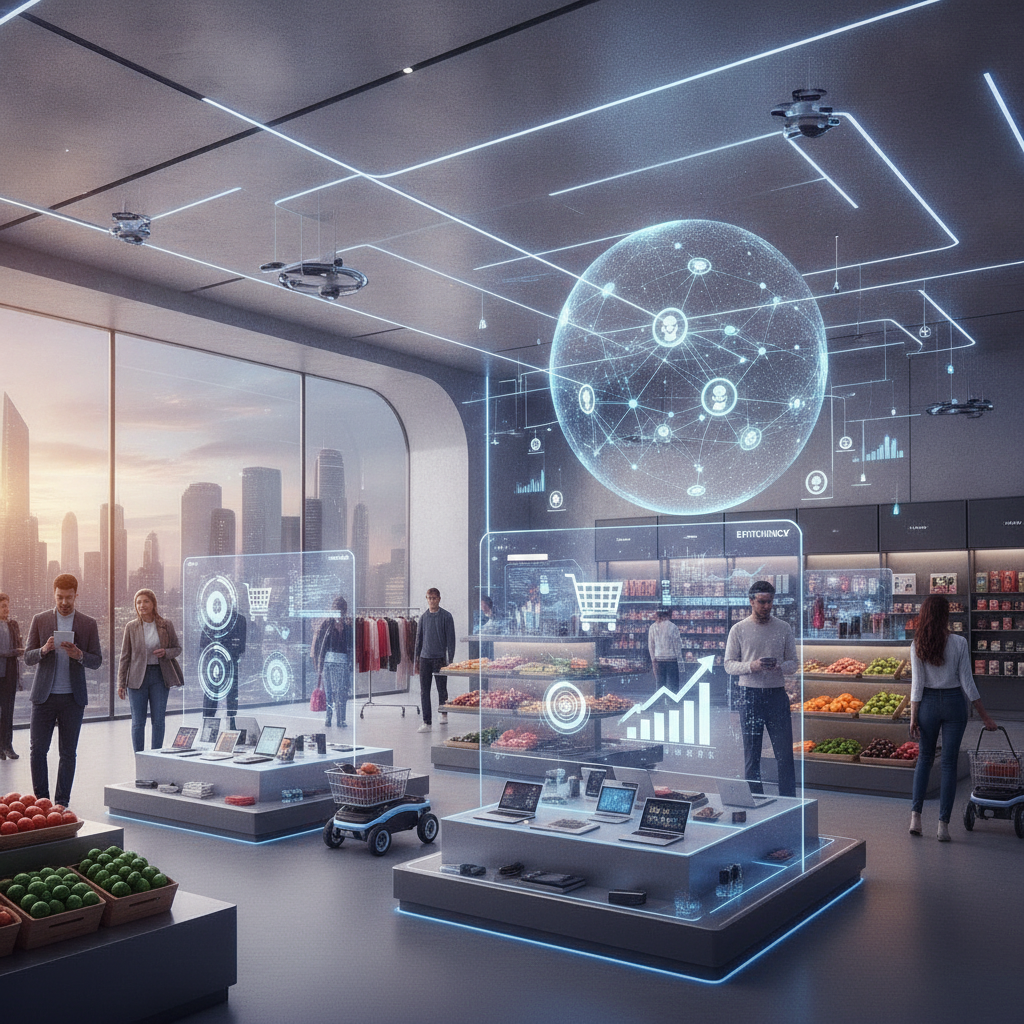
Table of Contents
- What is AI in Retail?
- Why AI Matters for Retailers
- Key Applications of AI in Retail
- Navigating the Challenges of AI Implementation
- Starting Your AI Journey in Retail
- The Future of AI in Retail
- Frequently Asked Questions
What is AI in Retail?
AI in retail leverages advanced algorithms, machine learning, and automation to optimize operations, enhance customer experiences, and drive profitability across the entire retail value chain. It's about using data to make smarter decisions, predict trends, and automate repetitive tasks, allowing retailers to adapt faster to market changes and consumer demands.
Far from being a futuristic concept, artificial intelligence is already woven into many aspects of modern retail, from the personalized recommendations you see online to the optimized routes taken by delivery trucks. For retailers, it represents a shift from reactive decision-making to proactive, data-driven strategies.
Why AI Matters for Retailers
In a highly competitive landscape, retailers face constant pressure to differentiate, improve efficiency, and meet ever-evolving customer expectations. AI offers tangible solutions to these challenges by providing insights and automation that human analysis alone cannot easily achieve.
Pro tip: Think of AI not as a replacement for human employees, but as a powerful tool that augments their capabilities, freeing them to focus on higher-value tasks and creative problem-solving.
Key Applications of AI in Retail
AI's versatility means it can be applied across nearly every facet of a retail business. Here are some of the most impactful areas:
Enhancing Customer Experience
Personalization is no longer a luxury but an expectation for today's consumers. AI excels at processing vast amounts of customer data to create highly individualized experiences.
- Personalized Product Recommendations: AI algorithms analyze past purchases, browsing history, and demographic data to suggest products a customer is most likely to buy, both online and in-store.
- Intelligent Chatbots and Virtual Assistants: These AI-powered tools provide instant customer support, answer common questions, guide shoppers through websites, and resolve issues 24/7, improving satisfaction and reducing the load on human staff.
- Dynamic Pricing: AI monitors competitor prices, demand fluctuations, and inventory levels to adjust product prices in real time, ensuring competitiveness and maximizing revenue.
- Targeted Marketing Campaigns: By segmenting customers based on behavior and preferences, AI helps create highly relevant marketing messages, leading to higher conversion rates and improved ROI. For more insights on this, explore A Practical Guide to AI in Marketing.
Optimizing Inventory and Supply Chain
Efficient inventory management and a robust supply chain are critical for retail profitability. AI brings predictive power to these complex areas.
- Demand Forecasting: AI analyzes historical sales data, seasonal trends, weather patterns, and even social media sentiment to predict future demand with greater accuracy, minimizing overstocking and stockouts.
- Automated Reordering: Based on demand forecasts and current stock levels, AI systems can automatically trigger reorder processes, ensuring optimal inventory levels without manual intervention.
- Supply Chain Optimization: AI can identify inefficiencies in logistics, optimize delivery routes, and even predict potential disruptions, improving delivery times and reducing costs. This mirrors applications seen in A Practical Guide to AI in Manufacturing.
Boosting Operational Efficiency
From store operations to workforce management, AI streamlines processes and improves productivity.
- Workforce Management: AI can forecast staffing needs based on predicted foot traffic and sales, optimizing shift schedules and improving labor cost management.
- Store Layout and Merchandising Optimization: By analyzing customer movement patterns and purchase data, AI can suggest optimal store layouts and product placements to maximize sales.
- Predictive Maintenance for Equipment: AI monitors the health of store equipment (e.g., refrigerators, POS systems) and predicts potential failures, allowing for proactive maintenance and reducing downtime.
Strengthening Security and Fraud Prevention
AI plays a crucial role in safeguarding retail businesses from various threats.
- Fraud Detection: AI algorithms can quickly identify suspicious transaction patterns, such as unusual purchase amounts or locations, helping to prevent credit card fraud and other illicit activities.
- Loss Prevention: By analyzing CCTV footage and sensor data, AI can flag unusual behaviors or potential theft incidents in real time, assisting security personnel.
Navigating the Challenges of AI Implementation
While the benefits are clear, implementing AI in retail isn't without its hurdles. Retailers must consider:
- Data Quality and Integration: AI systems are only as good as the data they consume. Ensuring clean, consistent, and integrated data from various sources (POS, e-commerce, CRM) is paramount.
- Cost of Implementation: Initial investments in AI technology, infrastructure, and expert talent can be substantial. Retailers need a clear ROI strategy.
- Talent Gap: Finding and retaining staff with the necessary AI and data science skills can be challenging.
- Ethical Considerations: Issues around data privacy, algorithmic bias, and transparency must be carefully managed to maintain customer trust and comply with regulations.
Starting Your AI Journey in Retail
For retailers looking to adopt AI, a strategic approach is key:
- Identify Clear Business Problems: Don't implement AI just for the sake of it. Focus on specific challenges like reducing stockouts, improving conversion rates, or enhancing customer service.
- Start Small with Pilot Projects: Begin with a well-defined, manageable project. This allows you to learn, demonstrate value, and build internal expertise without significant upfront risk.
- Focus on Data Infrastructure: Invest in robust data collection, storage, and governance processes. High-quality data is the foundation of effective AI.
- Partner with Experts: If internal resources are limited, consider collaborating with AI solution providers or consultants who specialize in retail applications.
- Foster an AI-Ready Culture: Educate your team about AI, its benefits, and how it will augment their roles. Change management is crucial for successful adoption.
The Future of AI in Retail
Looking ahead, AI will continue to deepen its integration into retail. We can expect more sophisticated predictive analytics, hyper-personalized shopping experiences driven by generative AI, and even more autonomous operations within stores and warehouses. The retailers who embrace these advancements strategically will be best positioned for sustained growth and customer loyalty.
Note: The principles of practical AI application in retail are similar to those in other sectors. You can find more practical guides for different industries, such as AI in Healthcare or AI in Recruitment, on the Everything Agentic blog.
Frequently Asked Questions
Is AI expensive for small retailers?
While advanced AI implementations can be costly, many accessible and scalable AI tools exist for small retailers. Cloud-based AI services, pre-built solutions for e-commerce platforms, and affordable analytics tools make AI increasingly within reach for businesses of all sizes, often on a subscription model.
What kind of data do I need to use AI in retail?
Effective AI in retail relies on diverse data sources, including transactional data (sales, returns), customer data (demographics, browsing history, loyalty program info), inventory data (stock levels, supplier info), operational data (staffing, store traffic), and external data (weather, social media trends, competitor pricing). The more relevant data, the better AI can perform.
Can AI replace human jobs in retail?
AI is more likely to transform job roles than replace them entirely. While AI can automate repetitive or data-intensive tasks, it also creates new roles in AI management, data analysis, and customer relationship management that require human oversight and creativity. The focus shifts to tasks that require uniquely human skills like empathy, complex problem-solving, and strategic thinking.
How long does it take to see results from AI in retail?
The time to see results varies widely depending on the project's complexity, the quality of data, and the specific goals. Simple AI applications, like chatbot implementation or basic recommendation engines, might show improvements within months. More complex projects, such as end-to-end supply chain optimization, could take longer to fully mature and deliver their full potential.
Ultimately, AI is a journey, not a destination, offering continuous opportunities for improvement and innovation in the retail sector.
Ready to explore more ways agentic AI can transform your business? Keep reading the Everything Agentic blog for practical guides and insights, or get in touch with us to discuss your specific needs.