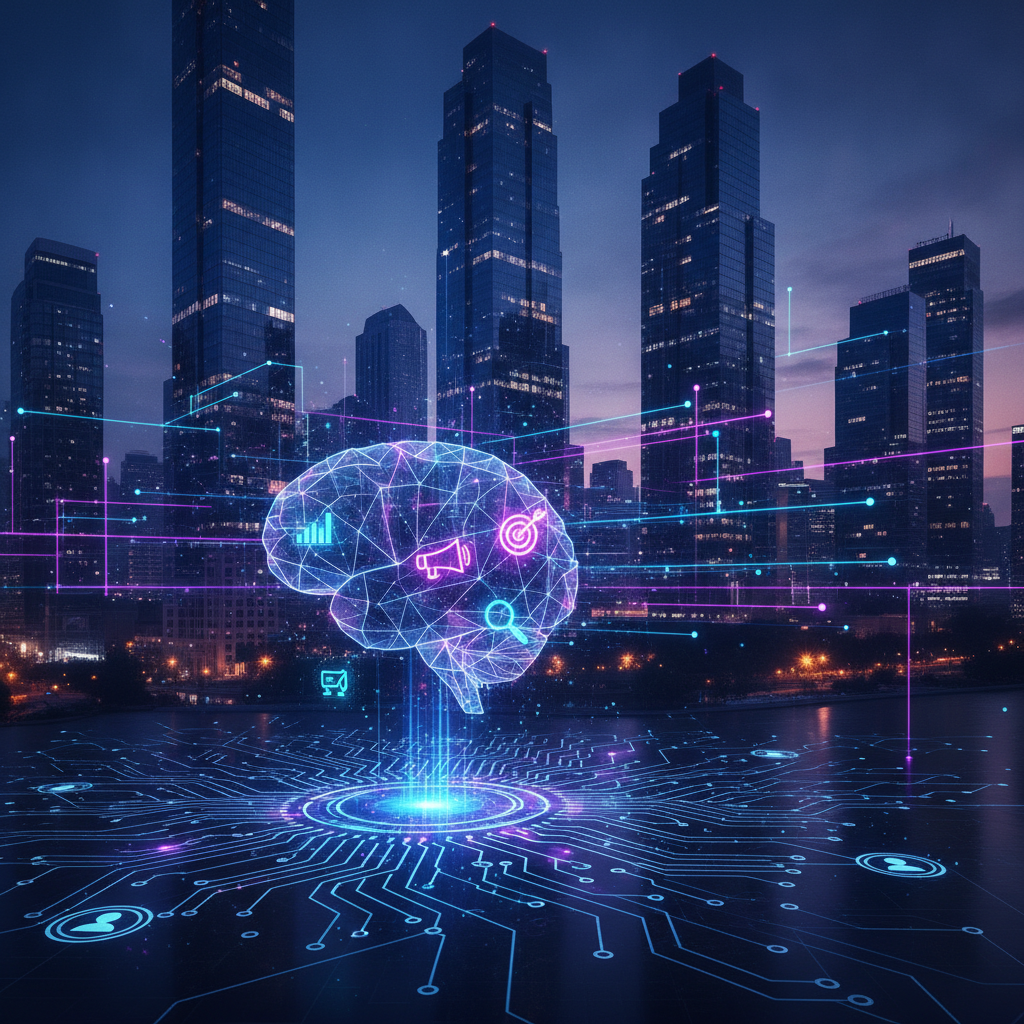
Artificial intelligence is rapidly reshaping every corner of business, and marketing is at the forefront of this transformation. From automating routine tasks to delivering deeply personalized customer experiences, AI in marketing empowers businesses to achieve unprecedented levels of efficiency and effectiveness. If you're looking to cut through the hype and understand how to practically integrate AI into your marketing strategy, you're in the right place. This guide will walk you through the core concepts, practical applications, and strategic considerations for leveraging AI to boost your marketing ROI.
Table of Contents
- Understanding AI in Marketing: Beyond the Buzzwords
- Key Benefits of Integrating AI into Your Marketing Strategy
- Practical Applications: Where AI Transforms Marketing
- Getting Started with AI in Your Marketing Efforts
- Navigating the Challenges and Ethical Considerations
- Frequently asked questions
Understanding AI in Marketing: Beyond the Buzzwords
AI in marketing refers to the application of artificial intelligence technologies, such as machine learning and natural language processing, to automate, predict, and optimize marketing efforts. This isn't about robots taking over your job, but rather about tools that augment human capabilities by processing vast amounts of data to identify patterns, make predictions, and execute tasks far faster and more accurately than humans alone.
Think of it as having a highly intelligent assistant who can analyze market trends, understand customer behavior, write compelling copy, and optimize ad spend in real-time. For example, an AI tool can analyze website visitor data to predict which products a customer is most likely to buy next, then automatically display those recommendations.
Key Benefits of Integrating AI into Your Marketing Strategy
Integrating AI into your marketing strategy offers a multitude of advantages, primarily centered around enhanced efficiency, improved decision-making, and superior customer engagement. These benefits translate directly into better campaign performance and increased return on investment (ROI).
- Increased Efficiency and Automation: AI automates repetitive tasks like data entry, email segmentation, and ad bidding, freeing up your team to focus on strategic initiatives and creativity. This can dramatically reduce operational costs and accelerate campaign execution.
- Hyper-Personalization at Scale: AI enables marketers to deliver highly relevant content, product recommendations, and offers to individual customers in real-time. By analyzing user behavior, preferences, and demographics, AI ensures that every interaction feels unique and tailored.
- Superior Data Analysis and Insights: AI tools can sift through enormous datasets, from website traffic to social media interactions, to uncover hidden patterns and predictive insights that human analysis might miss. This leads to more informed strategic decisions and a deeper understanding of your target audience. You can learn more about the foundational technology in The AI Stack Every Small Business Should Understand.
- Optimized Campaign Performance: Through continuous learning, AI algorithms can automatically adjust ad placements, bidding strategies, and content delivery to maximize engagement and conversion rates, ensuring your marketing budget is spent effectively.
- Enhanced Customer Experience: From intelligent chatbots providing instant support to dynamic content delivery, AI helps create seamless, satisfying customer journeys that build loyalty and advocacy.
Practical Applications: Where AI Transforms Marketing
AI's impact spans across the entire marketing funnel, offering specific solutions for various challenges. Here’s how AI is actively being applied today:
Content Creation and Optimization
AI-powered tools can assist in generating blog post outlines, drafting ad copy, writing email subject lines, and even composing basic articles. They can also analyze existing content to suggest improvements for SEO, readability, and engagement.
Pro tip: While AI can draft content quickly, always review and edit its output to ensure it aligns with your brand voice and offers genuine value to your audience. Human oversight remains crucial for quality and authenticity.
Personalization and Customer Experience
AI excels at segmenting audiences and delivering tailored experiences. This includes dynamic website content, personalized email campaigns based on browsing history, and product recommendations in e-commerce. AI-driven personalization can significantly increase engagement and conversion rates.
Data Analysis and Predictive Insights
Marketers use AI to analyze customer sentiment, predict future trends, identify high-value customer segments, and forecast sales. These predictive capabilities allow businesses to proactively adjust strategies and allocate resources more effectively.
Advertising and Campaign Performance
AI algorithms can optimize ad spend in real-time across various platforms, identifying the best channels, times, and audiences for your campaigns. This includes programmatic advertising, dynamic creative optimization, and fraud detection, ensuring your ads reach the right people at the right moment.
Customer Service and Support
Chatbots and virtual assistants powered by AI handle routine customer inquiries, provide instant answers, and guide users through common processes. This frees up human agents for more complex issues, improving overall customer satisfaction and reducing support costs.
Getting Started with AI in Your Marketing Efforts
Implementing AI in marketing doesn't require a complete overhaul of your existing operations. Start small, identify key pain points, and scale as you see results.
- Identify Your Marketing Goals: Determine specific areas where AI could have the most impact, such as improving lead generation, increasing conversion rates, or enhancing customer retention.
- Evaluate Your Current Tools and Data: Assess what data you currently collect and how it's structured. Many existing marketing platforms are integrating AI features, so you might already have a starting point.
- Research and Pilot AI Tools: Explore available AI solutions for content, personalization, advertising, or customer service. Start with a pilot program in one specific area to test effectiveness and gather insights.
- Integrate Gradually: Don't try to implement everything at once. Gradually integrate AI tools into your workflows, ensuring your team is trained and comfortable with the new technologies.
- Monitor, Analyze, and Optimize: Continuously track the performance of your AI-driven initiatives. Use the data to refine your strategies, proving AI's value and informing future investments.
Navigating the Challenges and Ethical Considerations
While AI offers immense potential, it's not without its challenges. Data quality is paramount, as AI models are only as good as the data they're trained on. Privacy concerns and ethical considerations around data usage and algorithmic bias must also be addressed transparently.
Marketers must ensure their AI implementations comply with data protection regulations and maintain user trust. Ethical AI practices build long-term customer relationships and safeguard your brand's reputation. For example, similar AI transformations are happening in other fields such as healthcare, legal services, and accounting, each navigating its own set of unique challenges and opportunities.
Embracing AI in marketing isn't about replacing human creativity or strategic thinking; it's about augmenting them. By leveraging AI to handle repetitive tasks, analyze complex data, and personalize experiences at scale, marketers can unlock new levels of efficiency, effectiveness, and innovation.
Ready to explore how AI can elevate your marketing efforts? Keep reading the Everything Agentic blog for more insights, or get in touch with us to discuss your specific needs.
Frequently asked questions
Is AI going to replace marketing jobs?
No, AI is unlikely to fully replace marketing jobs. Instead, it will transform them, automating routine and analytical tasks and allowing marketers to focus more on strategy, creativity, human connection, and complex problem-solving. Marketers who adapt and learn to work alongside AI tools will be highly valuable.
Do I need to be a data scientist to use AI in marketing?
No, you do not need to be a data scientist. While an understanding of data is beneficial, many AI marketing tools are designed with user-friendly interfaces that allow marketers to leverage AI capabilities without deep technical expertise. The key is understanding how to interpret the insights and apply them strategically.
How much does AI marketing software cost?
The cost of AI marketing software varies widely depending on the features, scale, and provider. Prices can range from free or low-cost tools for specific functions to comprehensive enterprise solutions costing thousands per month. Many platforms offer tiered pricing based on usage, features, or number of users.