
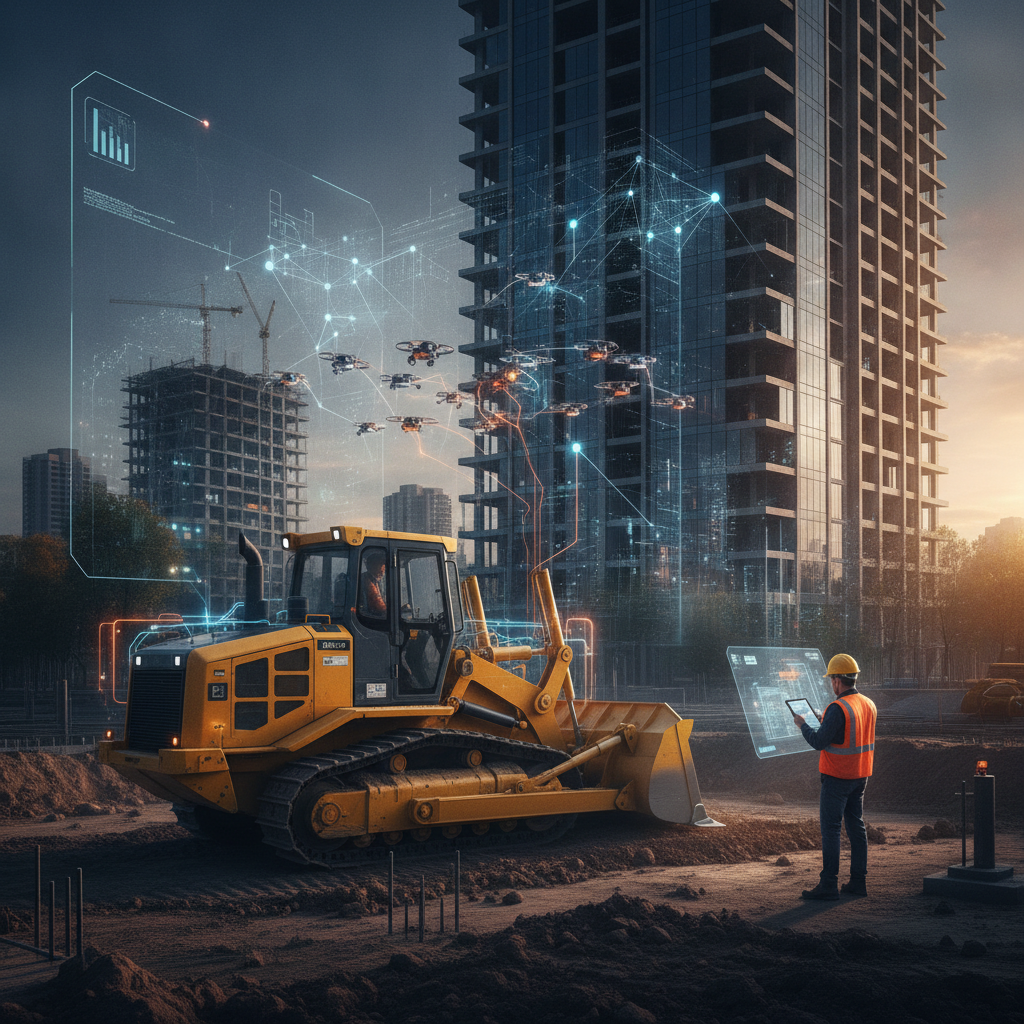
The construction industry, traditionally reliant on manual processes and human expertise, is now experiencing a profound shift thanks to artificial intelligence (AI). AI in construction leverages data and intelligent algorithms to enhance project planning, improve safety, optimize operations, and predict outcomes, leading to significant gains in efficiency and cost savings. This guide will walk you through the practical applications of AI in construction and how your business can begin to harness its power.
What is AI in Construction?
AI in construction refers to the application of intelligent technologies, algorithms, and data analysis to automate tasks, optimize decision-making, and improve various aspects of construction projects. This ranges from machine learning models predicting project delays to computer vision systems monitoring site safety, all aimed at making construction processes more efficient, safer, and cost-effective. Instead of simply digitizing existing workflows, AI introduces predictive capabilities, autonomous operations, and intelligent insights.
Why Construction Needs AI Now
The construction sector faces unique challenges, including tight margins, skilled labor shortages, complex supply chains, and significant safety risks. AI offers solutions to these persistent problems by turning vast amounts of project data into actionable intelligence. By automating repetitive tasks, identifying potential issues before they escalate, and optimizing resource allocation, AI helps companies overcome traditional hurdles and achieve higher levels of performance.
Pro tip: Think of AI not as a replacement for human judgment, but as a powerful assistant that processes data and highlights patterns far beyond human capacity, allowing project managers and engineers to make more informed decisions.
Practical Applications of AI in Construction
AI is being deployed across the entire construction lifecycle, from initial concept to ongoing maintenance. Here are some of the most impactful applications:
AI for Enhanced Planning and Design
AI tools can analyze historical data from past projects, geological surveys, and environmental factors to optimize designs and predict potential challenges. For example, generative design AI can explore thousands of design alternatives based on specified constraints like material costs, structural integrity, and energy efficiency, helping architects and engineers arrive at optimal solutions much faster than manual methods. This also aids in more accurate cost estimation and risk assessment during the pre-construction phase.
AI for Optimized Project Management and Scheduling
Managing complex construction schedules and resources is a major challenge. AI powered platforms can analyze real-time project data, weather forecasts, labor availability, and material delivery schedules to create highly accurate project timelines and identify potential bottlenecks. If a material delivery is delayed, the AI can automatically suggest alternative scheduling adjustments to minimize impact, keeping projects on track and within budget. This proactive approach minimizes costly delays and reworks.
AI for Improved Site Safety and Risk Mitigation
Safety is paramount in construction. AI solutions utilize computer vision through cameras and sensors to monitor construction sites for potential hazards, detect unsafe worker behavior, or identify when workers are in restricted zones. For instance, AI can detect if a worker is not wearing a hard hat in a designated area and send an immediate alert, significantly reducing the risk of accidents. It can also analyze environmental data to predict weather-related risks or structural integrity issues, enhancing overall site safety.
AI for Smarter Quality Control and Progress Monitoring
Ensuring quality and tracking progress manually can be time-consuming and prone to human error. Drones equipped with AI powered cameras can autonomously capture site images and videos, which AI then analyzes to compare actual progress against BIM (Building Information Modeling) plans. This allows for rapid identification of deviations, quality issues, or incorrect installations. For example, AI can detect if a rebar cage is misaligned or if concrete curing is not proceeding as expected, enabling immediate corrective actions.
AI for Predictive Maintenance and Asset Lifecycle Management
Once a structure is complete, AI continues to add value through predictive maintenance. Sensors embedded in buildings and infrastructure can collect data on performance, wear and tear, and environmental conditions. AI analyzes this data to predict when equipment or structural components are likely to fail, allowing for proactive maintenance before costly breakdowns occur. This extends the lifespan of assets, reduces operational costs, and minimizes disruptions for building occupants.
Implementing AI in Your Construction Business: A Step-by-Step Approach
Adopting AI doesn't require a complete overhaul overnight. Here's a practical approach:
- Identify Pain Points: Start by pinpointing specific areas in your current operations where efficiency is low, costs are high, or risks are prevalent. Is it project delays, safety incidents, or inaccurate estimates?
- Start Small with a Pilot Project: Choose one well-defined problem and implement an AI solution on a single, manageable project. This could be using AI for progress monitoring on a small site or an AI tool for better material ordering.
- Gather and Prepare Data: AI thrives on data. Ensure you have access to relevant historical project data, sensor data, or image data. Data cleaning and structuring are crucial steps.
- Invest in the Right Tools and Expertise: Research AI software solutions tailored for construction. You might need to upskill your team or partner with AI specialists to implement and manage these systems. For broader understanding of essential AI tools, consider reading about The Practical AI Stack for Every Small Business.
- Monitor, Evaluate, and Scale: Continuously track the performance of your AI solution. What benefits are you seeing? What challenges remain? Use these insights to refine your approach and gradually scale AI adoption to other projects and areas of your business.
Addressing the Challenges and Ethical Considerations
While the benefits of AI are significant, implementing it in construction comes with challenges. Data privacy and security are paramount, especially when handling sensitive project information or monitoring worker activity. Ensuring data quality and integration across various systems can be complex. There are also ethical considerations, such as the potential impact on jobs, bias in AI algorithms, and the need for transparency in decision-making processes. A thoughtful, human-centered approach is vital for successful and responsible AI adoption.
The Future Outlook for AI in Construction
The role of AI in construction is only set to expand. We can expect more sophisticated predictive analytics, highly autonomous construction robots, advanced digital twins that merge physical and virtual project models, and even more integrated project management systems. As AI tools become more accessible and easier to implement, they will become indispensable for companies aiming to stay competitive and build more efficiently, safely, and sustainably.
Frequently Asked Questions
Can AI replace construction workers?
No, AI is designed to augment human capabilities, not replace them. AI automates repetitive tasks, provides data-driven insights, and handles dangerous activities, freeing up human workers to focus on more complex problem-solving, creative tasks, and skilled craftsmanship. It changes the nature of work, creating new roles rather than eliminating all existing ones.
Is AI only for large construction companies?
While large companies often have more resources for initial investment, AI is becoming increasingly accessible for businesses of all sizes. Many AI tools are cloud-based, scalable, and offer subscription models, making them viable for small to medium-sized enterprises looking to gain a competitive edge. Starting with a focused pilot project can demonstrate value without massive upfront costs.
What kind of data does AI need in construction?
AI in construction can utilize various data types, including historical project plans, cost reports, BIM models, environmental sensor data, drone imagery, safety incident logs, and equipment maintenance records. The more comprehensive and clean the data, the more accurate and useful the AI's insights will be.
How quickly can I see results from implementing AI?
The timeline for seeing results can vary widely depending on the complexity of the AI solution and the scope of implementation. Simple applications, like AI-driven progress monitoring, might show benefits within weeks or months. More complex integrations, such as predictive analytics for an entire project portfolio, could take longer to yield significant, measurable returns, often requiring several months to a year for full optimization.
Building a Smarter Future
AI is not just a technological trend; it's a fundamental shift in how the construction industry operates. By embracing AI, construction companies can move beyond traditional limitations, build with greater precision and speed, enhance safety standards, and ultimately deliver higher quality projects. The journey towards an AI-powered future in construction is about strategic implementation and a commitment to innovation, unlocking new levels of productivity and success. Keep exploring the possibilities that agentic technologies offer for your business on the Everything Agentic blog, or get in touch with us to discuss your specific needs.